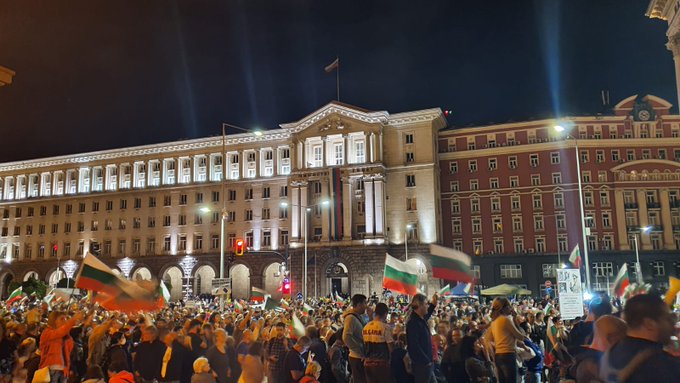
Bulgaria’s Election Spiral: Scratching Beneath the Surface
Where is Bulgaria headed after the fifth parliamentary election in the span of two years? My latest piece for New Eastern Europe titled “Bulgaria’s election spiral: the anatomy of disappointment” explains why the current political crisis can only be overcome if its roots are properly understood and addressed. In a country like Bulgaria, where appearances may often be deceiving, however, identifying these causes is not a straightforward task.
- What does Boyko Borissov have to lose if his party is not part of government?
- What strategies has Bulgaria’s status quo employed to sabotage the formation of a stable regular government in the past two years?
- Who are the “poisonous lookalikes” on the Bulgarian political stage and what are they used for?
- Why did President Rumen Radev drastically alter his views on the rule of law and Borissov?
- How can we explain the rise of the pro-Russian “Revival” and to what extent is the threat to Euro-Atlanticism in Bulgaria real?
- What do the latest voting patterns tell us?
You can read my full article here.
 Personal Blog of Dr. Radosveta Vassileva