Can You Fight Corruption in a Post-Communist Mafia State?

‘Is it Possible to Fight Corruption in a Post-Communist Captured State?’ is the question I purport to answer in a chapter which is forthcoming in Michala Meiselles, Penelope Giosa and Nicholas Ryde (eds), Contemporary Economic Crime: Issues and Challenges (Routledge 2025). I examine the failure of Bulgarian anti-corruption reforms and, in passing, highlight how the already dire situation at the time of Bulgaria’s accession to the European Union was exacerbated by the Cooperation and Verification Mechanism (CVM) under which the European Commission checked off ill-intended, pseudo reforms as progress.

Was Bulgaria’s anti-corruption fight doomed from the beginning? Regrettably, Bulgaria’s anti-corruption efforts are traditionally characterized by diluting responsibility by creating numerous bodies whose competences overlap, actively capturing institutions and removing checks and balances, and tirelessly avoiding to address key challenges identified in the case law of the European Court of Human Rights and the opinions by the Venice Commission. This is not surprising considering that the country can be described as a mafia state in view of how it is governed. What is disappointing, however, is that the EU Commission did not analyze the substantive implications of these pseudo reforms – instead, it was charmed by their shiny wrapping. All of the above-mentioned carefully planned strategies to sabotage anti-corruption efforts were portrayed as legitimate anti-corruption efforts by Bulgaria’s governments, which actively deceived the public that they were addressing recommendations by the EU Commission itself or other institutions (Council of Europe bodies, etc.).

Overall, not only Bulgaria needs major reforms, but also the EU Commission should not take Bulgarian governments’ statements at face value.

How the CJEU Passed Off a Hot Rule of Law Potato

On 30 April 2025, the CJEU handed down its much-anticipated judgment in joined cases C‑313/23, C‑316/23, C‑332/23, which, among other pertinent questions on the GDPR, concerns the compatibility of Article 19 TEU and Article 47 of the EU Charter with a situation in which the members of a judicial inspection body have de facto remained in office indefinitely. Regrettably, however, the highly formalistic ruling will hardly make a difference in Bulgaria from where the preliminary references originated. It fails to address the underlying rule of law challenges faced by both the Judicial Inspectorate and the Supreme Judicial Council in Bulgaria at their core. As such, the judgment is a missed opportunity – an attempt to hand off a hot “rule of law” potato.

You can read my full commentary for the Verfassungsblog here.

My Blog Made It to the Top 15 of Rule of Law Blogs by FeedSpot

I recently learned that my blog has been included in the Top 15 of Rule of Law blogs in 2024 by FeedSpot. It has been ranked fourth! Moreover, it is in the company of university and institutional blogs. The ranking is based on ‘relevancy, authority, social media followers and freshness’.

To this end, I would like to thank my subscribers and my readers for their interest in my work and their support, which have undoubtedly contributed to this achievement, and wish them a wonderful year ahead!

Regrettably, 2024 was not a good year for Bulgaria’s rule of law and, by the looks of it, the start of 2025 will be even more challenging. Furthermore, we have a 15-year+ record of observing how EU institutions prioritize geopolitics over substantive human rights and turn a blind eye to blatant abuses because it suits their macro agenda. However, I am a firm believer that only by persistently shining a light on the endless episodes of the country’s rule of law breakdown, a difference can be made. If you knock on a door persistently, you will surely wake up someone… in Bulgaria, the EU or elsewhere! As we have seen based on their sanctions record, the US and the UK seem more concerned by Bulgaria’s rampant corruption than the competent international institutions, which not only gives a ray of hope, but also exposes the dual standards in the EU.

Bulgaria’s Constitutional Drama and the Recent Judgment by the Constitutional Court

On 26 July 2024, Bulgaria’s Constitutional Court declared a significant part of constitutional amendments enacted in a rush in December 2023 unconstitutional. These amendments were allegedly aimed at the depoliticization of the Supreme Judicial Council and the decentralization of the Prosecutor’s Office, and had been praised as progress in the country’s latest 2024 Rule of Law report by the EU Commission. Yet, a closer looks shows that the amendments do not comply with key recommendations by the Venice Commission and could worsen an already dire situation.

Sadly, in the case of Bulgaria, the EU Commission has a long history of seeing progress when the rule of law is under assault, as visible by the failed Cooperation and Verification system which did not help the country solve a single major rule of law challenge. Why does the EU Commission recognize as progress any step in any direction without analysis of its merit in context? You can read my latest analysis of the Verfassungsblog here.

The EPPO – a Domesticated Cat or a Tiger?

The European Public Prosecutor’s Office (EPPO) has just celebrated the third anniversary of the start of its operations. As a country frequently shaken by scandals implicating abuses of EU funds and known for rampant corruption, Bulgaria provides ample opportunities for the EPPO to show its teeth. Sadly, however, this institution has little to boast with in Bulgaria – it seems to have fallen victim to the country’s long-standing challenges in the area of the rule of law.

Without implementing changes ensuring less biased appointment procedures for European Delegated Prosecutors (EDPs) from Bulgaria and without resolving Bulgaria’s rule of law challenges first, the EPPO’s legitimacy and work will always be under question. In other words, while hoping to be a tiger, the EPPO will remain a domesticated cat in Bulgaria until reforms take place.

My latest analysis for the Verfassungsblog can be found here.

Nikolay Denkov’s Government and the Great Betrayal of the 2020 Anti-Corruption Protests

In my latest article for New Eastern Europe, I shine a light on the Faustian bargain between reformist parties (PPDB) and parties of the establishment (GERB; DPS) in Bulgaria, which led to the election of Nikolay Denkov’s government in 2023. While, from an outside perspective, the governing coalition established stability after a long election spiral, it symbolizes the betrayal of the 2020 anti-corruption protests to many at home. The anti-corruption efforts and the measures supposed to strengthen the rule of law, which PPDB promised, are a distant memory. Not only did the recent coalition governing Bulgaria whitewash figures suspected of being implicated in grand corruption, such as Boyko Borissov and Delyan Peevski, but also it engaged in pseudo-reforms, including a constitutional reform, whose true purpose is to solidify Borissov and Peevski’s influence in the justice system. It does not help that the ministers look like mere puppets in the hands of the shameful political union.

Against the background of high-profile murders of figures with links to organized crime, who are also suspected of synergies with politicians, Denkov’s government and its future successor lose even more credibility. One wonders who governs Bulgaria, where decisions are taken, and to what extent organized crime plays a role in the political landscape.

You can read my article “Bulgaria’s Faustian bargain and the betrayal of the 2020 anti-corruption protests” here.

EU Bureaucracy Undermines Human Rights

In my latest piece for the Verfassungsblog, I share the lessons learned from a 5-year long journey of trying to persuade the EU Commission and the EU Parliament to comply with their obligations under the EU Treaties. Namely, the EU Commission has recently launched an infringement procedure against Bulgaria in view of its breaches of Directive 2016/343 on the presumption of innocence and on grounds I have been raising in formal complaints to EU institutions since 2018. My 5-year long disillusioning experience of raising concerns about Bulgaria’s deliberate breaches of EU law before the EU Parliament and the EU Commission may serve as a case study providing some food for thought about the value of fundamental rights in the eyes of these EU institutions, as well as their handling of reasoned citizen complaints.

You can read my full article titled ‘At a Snail’s Pace: How EU Bureaucracy Undermines Fundamental Rights’ here.

Bulgaria’s Election Spiral: Scratching Beneath the Surface

Where is Bulgaria headed after the fifth parliamentary election in the span of two years? My latest piece for New Eastern Europe titled “Bulgaria’s election spiral: the anatomy of disappointment” explains why the current political crisis can only be overcome if its roots are properly understood and addressed. In a country like Bulgaria, where appearances may often be deceiving, however, identifying these causes is not a straightforward task.

  • What does Boyko Borissov have to lose if his party is not part of government?
  • What strategies has Bulgaria’s status quo employed to sabotage the formation of a stable regular government in the past two years?
  • Who are the “poisonous lookalikes” on the Bulgarian political stage and what are they used for?
  • Why did President Rumen Radev drastically alter his views on the rule of law and Borissov?
  • How can we explain the rise of the pro-Russian “Revival” and to what extent is the threat to Euro-Atlanticism in Bulgaria real?
  • What do the latest voting patterns tell us?

You can read my full article here.

Няколко думи за последните пиеси на Иван Гешев

За съжаление от години българските медии отразяват безкритично твърдения на български прокурори, независимо дали те звучат абсурдно и/или показват фундаментално погазване на закона. Примерите изобилстват!

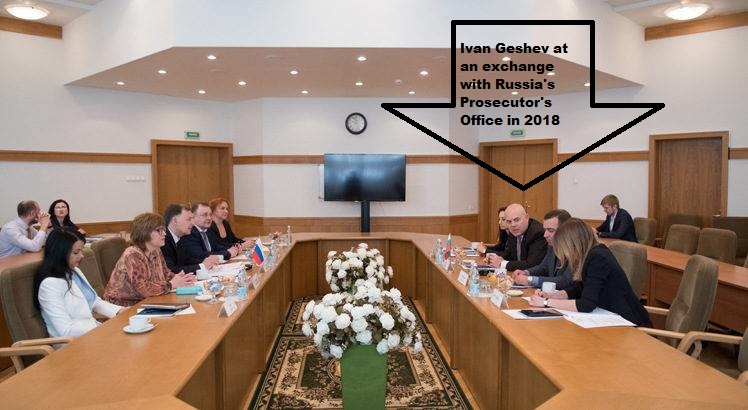
В този план, във връзка с последните нелепици, изречени от главния прокурор, който замеси името на баща ми в поредната си пиеса, предлагам на вашето внимание публичното изявление на Цветан Василев от 10.04.2023 г. Изказвам и възмущението си, че медиите повториха и разпространиха нелепи лъжи по адрес на баща ми. За сметка на това, поради “високата” си етичност, нито го потърсиха за коментар, нито отразиха изявлението му по повод медийните фойерверки на Иван Гешев.

Няколко акцента от изявлението:

Read More

My Interview with My Publisher Intersentia: What Are the Unique Features of Bulgarian Law?

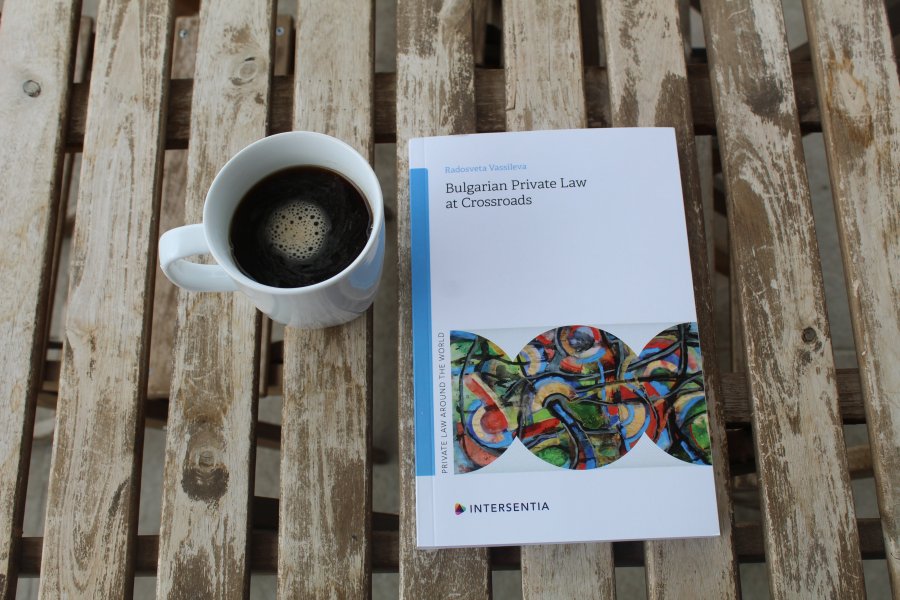
Recently, I gave an interview to my publisher Intersentia discussing the unique features of Bulgarian law, which I have showcased in my book Bulgarian Private Law at Crossroads.

My book Bulgarian Private Law at Crossroads was published by Intersentia on 26 August 2022. It marked the beginning of Intersentia’s “Private Law around the World” series. You can learn more about its goals in a blog piece I wrote for the British Association of Comparative Law last summer.

The book lies at the intersection of comparative law, European private law, and legal history. It surveys the fascinating and turbulent development of Bulgarian private law in the past century and a half and shines a light on little known influences on Bulgarian law (many of you will be surprised by what I found). Because of the historical dimension, I have drawn parallels between communist law and current Bulgarian law to discover some totalitarian practices are being revived.

Earlier this year, I was honored to learn that more than 50 libraries, including the library of Yale University, Princeton, UPenn, McGill, etc., had already acquired my book.

I republish my interview with Intersentia below:

Read More

The Constitutional Assault on the Istanbul Convention in Bulgaria

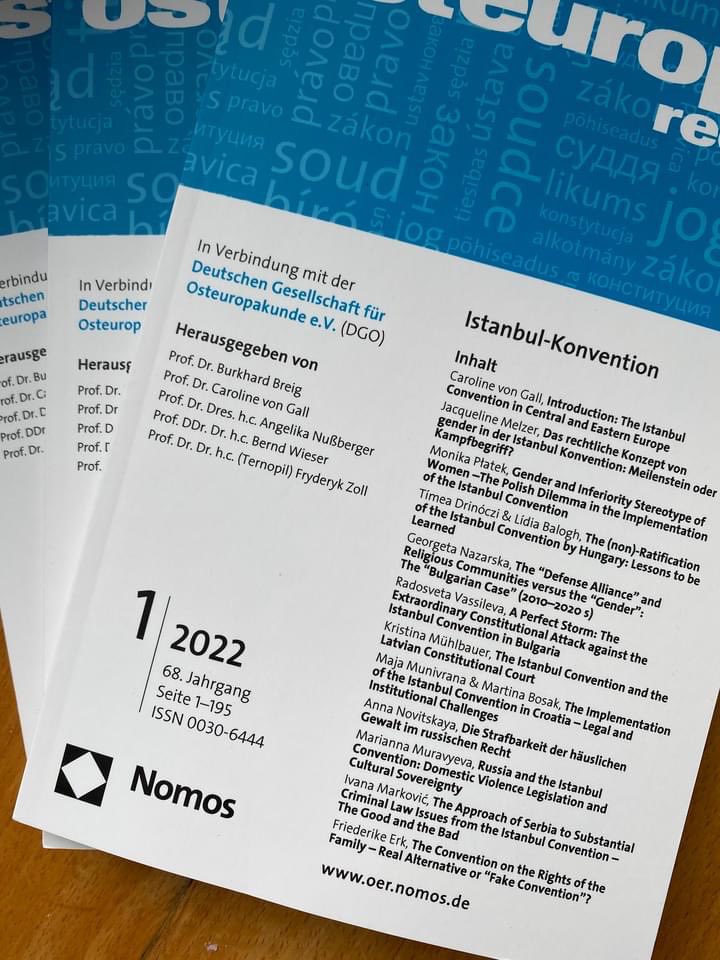
Earlier this year, Osteuropa Recht, the German academic journal focused on East European law(s), published a special issue dedicated to the fate of the Istanbul Convention in Eastern Europe. I was happy to contribute to it with a piece on Bulgaria discussing the extraordinary constitutional attack against the convention. Osteuropa Recht‘s publisher, Nomos, has decided to make my article open access, so that more people can read it. In case you are interested in my take, you can find my contribution titled “A Perfect Storm: The Extraordinary Constitutional Attack against the Istanbul Convention in Bulgaria” here.

Yellow Light for Disciplining Inconvenient Judges by the ECtHR?

In my latest article for the Verfassungsblog, I analyze the implications of the recent ECtHR judgement on the disciplinary proceedings against judge Miroslava Todorova (Todorova v Bulgaria). Unfortunately, the ECtHR decided in favor of Bulgaria on the two most worrisome issues – violations of the right to a fair trial and the right to private life. In her application, judge Todorova attempted to raise awareness of systemic issues of Bulgaria’s justice system. However, the Court downgraded the harassment against her to an isolated case linked to her role in a professional organization and merely found a violation of her right to free speech. In this way, the ECtHR may have limited access to relief for other judges in similar circumstances. You can read my article ‘Yellow Light for Disciplining Inconvenient Judges? The ECtHR’s Ambivalent Judgment in Todorova v Bulgaria‘ here.

Can You Navigate Bulgaria’s Media Jungle?

Earlier this summer, I was invited to share my thoughts on media freedom in Bulgaria as part of a project promoting free speech in Eastern Europe. I am very grateful for this opportunity because sharing your opinion without censorship is a luxury and a privilege which many people do not have these days. This is especially valid when you talk about media.

I was hesitating how best to approach the topic as there are so many clichés floating around to which I do not subscribe at all. I believe that many reports on Bulgaria are biased because they do not pinpoint the very core and origin of the problem. At the end, I decided to merely paint the picture that I see. No sugar-coated, misinformed reports, no euphemisms, no quick fix solutions. You can read my commentary “Bulgaria’s media jungle: the good, the bad, and the ugly” for New Eastern Europe here.

On Elections and Political Suicide

Shortly after the snap parliamentary elections in July, I shared my thoughts on Bulgaria’s future with New Eastern Europe. It appears that one of the parties, which many hoped to provide an alternative to the current dire state of affairs, may have been hijacked by Bulgaria’s deep state. As a result, instead of cooperating with other opposition parties like many expected, it indulges in disruptive behavior. It seems that not only it does not mind committing political suicide in the process, but also hopes that other opposition parties do the same.

In Bulgaria, we usually use the term ‘deep state’ to refer to the network built by Bulgaria’s communist secret services (Darzahvna sigurnost) which was never dismantled because full lustration – disclosing the names of all agents of this network and their activities – was not implemented. Darzhavna sigurnost had become a state within the state, essentially governing the country in the final stages of communism. This network may have evolved and adapted to the post-communist reality, but its values have remained the same.

Dismantling Borissov’s autocracy is surely what many players behind the curtain hope to avoid.

You can read my article ‘Snap elections in Bulgaria: who is ready for political suicide?’ here.

Parliamentary Elections in Bulgaria

On 4 April 2021 or in 4 days, Bulgarian citizens will vote for a new Parliament. Unusual elections, considering Bulgarians have been protesting against Boyko Borissov’s government for 8 months and Borissov did everything possible to avoid early elections, which means these are the first parliamentary elections organized by a government led by Boyko Borissov. I have written an article for Res Publica about the incredibly high stakes which was published earlier today. I republish it here with the permission of the editors.

Read More

The EU Accession of the Western Balkans: The Perspective of a Neighbor

The editors of the Res Publica Blog – a project of the Institute of Communications Studies in Macedonia – recently asked me to share my views on the prospects for EU accession of Western Balkan countries, as part of the “Tales from the Region” blogging initiative. Considering how much ink has been spilled on this issue, I thought it was more appropriate to reason in the reverse – can the Western Balkans learn anything from the experience of new EU Member States like Bulgaria? I republish my article in full on my own blog with Res Publica‘s permission.

Read More

On Bulgaria’s Notorious Veto on Macedonia’s EU Accession Talks

At the end of 2020, I was asked to share my thoughts on Bulgaria’s veto on Macedonia’s accession talks for EU membership for the Res Publica Blog – a project of the Institute of Communications Studies in Macedonia whose aim is to fight disinformation through research. The project is financed by the British Embassy in North Macedonia and publishes primarily academic writers. I republish my article in full on my own blog with the permission of the editors of Res Publica. As you will see, I do not share the views of the Bulgarian government – I find they belong to a different era.

Read More

100 Days of Protests Exposing Bulgaria’s Rule of Law Decay

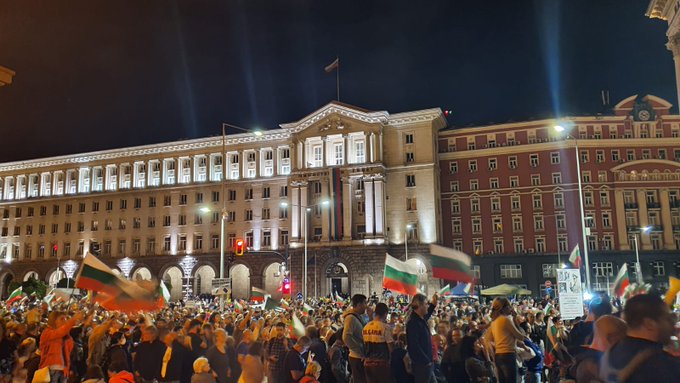
Bulgarians have been protesting against Boyko Borissov’s third government and General Prosecutor Ivan Geshev for more than 100 days. Beyond exposing the rampant corruption and the rule of law decay in the country, what have the protests achieved? Most importantly – what lies ahead, considering the European People’s Party continues to support its loyal autocrat? I ponder these questions in my latest article for New Eastern Europe – “Bulgaria: 100 days of protests”.

Surely, one of the longstanding problems of Bulgaria’s justice system, which the protests have also showcased, is the lack of accountability of the General Prosecutor, coupled with the excessive powers of the Prosecutor’s Office s/he leads. I was honored to be interviewed for a an episode of the new podcast of Verfassungsblog and the German Bar Association, “Let’s Talk about the Rule of Law”, about the role that prosecutor’s offices should have – their relationship with the executive, the checks and balances to which they should be subjected, etc. José Manuel Santos Pais, President of the Consultative Council of European Prosecutors (CCPE), Prof. Thomas Groß, and I had a fascinating discussion. You can listen to episode 5 of the new “Let’s Talk about the Rule of Law” podcast here.

Read More